
How Via Charon Can Help you Get Petroleum and sell it
Petroleum really doesn’t have the best PR. It’s the “black gold” that fuels geopolitical tensions, the sticky stuff that occasionally ends up on wildlife documentaries, and the reason your gas bill sometimes makes you want to cry into your morning coffee. But here at Via Charon, we see it differently. We see crude oil and refined petroleum products for what they truly are: the lifeblood of global industry, a fascinatingly complex financial instrument, and, frankly, a product we are exceptionally good at supplying.
Whether you are looking to secure a steady stream of Brent Crude, navigate the murky waters of LPG logistics, or simply understand why the price per barrel just jumped five dollars because of a sandstorm in the Strait of Hormuz, you have come to the right place. Via Charon isn’t just a trader; we are your strategic partner in the energy sector, ensuring that from the wellhead to the final sale, your supply chain is not only efficient but also intelligent.
What is Petroleum?
At its core, petroleum is a naturally occurring, unrefined mixture of hydrocarbon deposits and other organic materials. In its raw state, it is often called crude oil. But in the world of sales and refining, we don’t just look at oil; we look at its characteristics.
To categorize crude oil we have to assess he API gravity (density) and sulfur content. These two factors determine the crude’s “type” and its value .
- Light vs. Heavy: This refers to density. Light crude has a high API gravity, meaning it flows easily and is cheaper to refine into high-value products like gasoline and jet fuel. Heavy crude is like molasses; it requires more complex (and expensive) processing .
- Sweet vs. Sour: This refers to sulfur content. Sweet crude contains less than 0.5% sulfur. It is the darling of the industry because it is less corrosive and easier to handle. Sour crude contains more sulfur (over 0.7%), requiring extra steps (and money) to remove the nasties .
These properties create the benchmarks you hear about on the news. Brent Crude is a light, sweet blend from the North Sea that serves as a global pricing benchmark. Bonny Light is Nigeria’s premium grade—highly desirable for its low sulfur content. West Texas Intermediate (WTI) is the standard for U.S. oil. On the other end of the spectrum, you have heavy sours like Maya or Arab Heavy, which are cheaper to buy but costlier to refine. At Via Charon, we understand the alchemy of these grades, ensuring you get the right type of crude for your specific refining configuration.
How is Petroleum refined and processed?
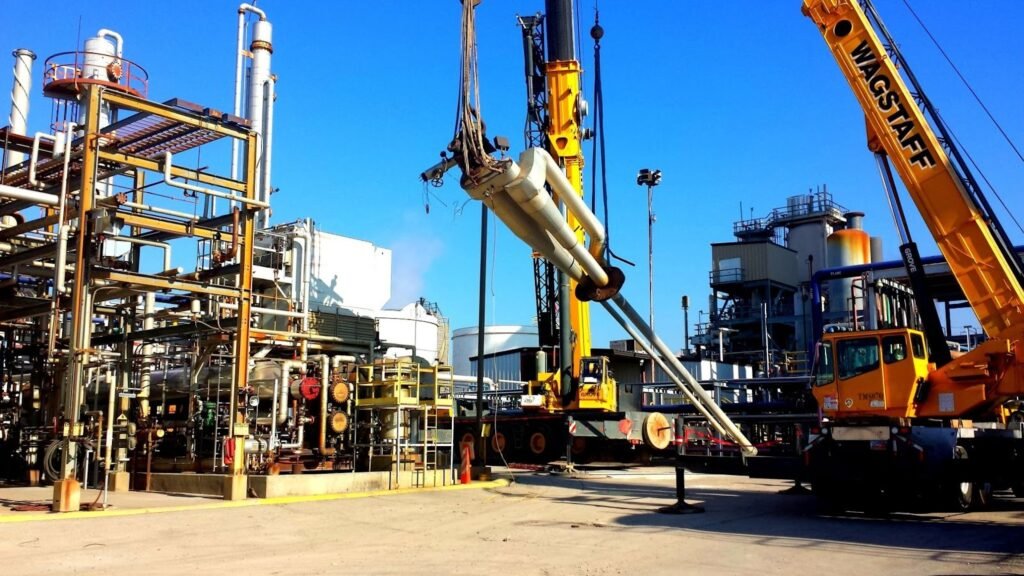
The journey of petroleum starts deep beneath the earth’s surface or under the ocean floor. Extraction is the first physical step—drilling rigs punch through rock to release the pressurized hydrocarbons. Once the “black gold” is brought to the surface, the real work begins.
Processing starts with separation. The crude is heated in a distillation tower. Because different hydrocarbons boil at different temperatures, they separate into factions: lighter gases at the top, naphtha and gasoline in the middle, and heavy fuel oil or bitumen at the bottom .
From there, it gets complex. Modern refineries aren’t just distilling; they are cracking. Using technologies like Fluid Catalytic Cracking (FCC) or Hydrocracking, they break down heavy molecules into lighter, more profitable ones . They also desulfurize products to meet modern environmental standards. The result? Everything from the propane in your backyard grill to the asphalt on the highway.
What is the difference between LNG and LPG?
Speaking of gases, let’s briefly touch on LPG vs. LNG. They sound like alphabet soup, but they are different:
- LPG (Liquefied Petroleum Gas) is primarily propane and butane, a byproduct of natural gas processing and oil refining. It’s stored under moderate pressure and used for heating, cooking, and autogas .
- LNG (Liquefied Natural Gas) is primarily methane, cooled to a cryogenic -162°C to become liquid. This process shrinks its volume dramatically for transport across oceans in specialized tankers .
Who exports and imports the most oil globally?
Crude oil is the most traded commodity on earth, but the flow isn’t equal. Who buys and who sells shifts with geopolitics.
Currently, the United States and China are the world’s largest importers, though the US also exports heavily. For the UK, major imports often come from the US, Norway, and OPEC nations. In fact, recent data shows the UK imports significant volumes of crude petroleum and petroleum gas from the United States .
But there is a whole world of trading happening outside the official lines—what we call the Dark Fleet (or Ghost Fleet). This refers to aging tankers that operate opaquely, often turning off their Automatic Identification Systems (AIS) to hide their location. This fleet is heavily utilized by Iran to circumvent US sanctions, particularly to move oil to China .
Despite the “maximum pressure” policies and sanctions reimposed by the UN (via the snapback mechanism) and the US, Iran continues to export oil through complex networks of front companies and ship-to-ship transfers . This is a high-stakes game of maritime hide-and-seek, where the cargo is worth billions and the risk of seizure or secondary sanctions is constant. At Via Charon, we pride ourselves on operating strictly within the global market parameters, ensuring our clients never have to worry about the legal headaches associated with sanctioned cargo.
What affects the price of oil?
If there is one constant in the oil market, it is volatility. And nothing spikes volatility like conflict.
How war in the Middle East affects the price of oil?
When war erupts in the Middle East, the world holds its breath. Take the Iran-USA war of 2026. When Iran targeted oil refineries in Saudi Arabia, Qatar, and Kuwait in retaliation for strikes on its infrastructure, the global market reacted instantly. Brent crude surged over 50%, trading above $110 a barrel . This isn’t just about the destruction of facilities; it is about the fear of what comes next.
The Chokepoints: The straits of oil passage
Then there are the straits. Approximately 21% of the world’s petroleum passes through the Strait of Hormuz . When tankers are attacked or Iran threatens to close the strait, insurance premiums skyrocket, and so do prices. Recently, as the conflict escalated, freight rates for tankers heading to China hit record highs because vessels simply stopped sailing into the Persian Gulf . Similarly, attacks in the Red Sea (near the Suez Canal) force ships to take the long way around Africa, removing tankers from the market and tightening supply.
How does the Petrodollar and OPEC affect the oil market?
Historically, oil was exclusively traded in US dollars—the Petrodollar system. This gave the US immense economic leverage. However, as countries like China and Russia seek to reduce this influence, we see a shift. Oil being transacted in Chinese Yuan (the “Petroyuan”) or other currencies is beginning to erode the dollar’s monopoly, potentially altering global pricing dynamics .
OPEC (Organization of the Petroleum Exporting Countries) also plays a pivotal role. Remember the 1973 Oil Crisis? OPEC, led by Arab nations, slapped an embargo on the US and other allies supporting Israel during the Yom Kippur War. The price of oil quadrupled almost overnight, sending Western economies into a tailspin . Today, OPEC+ (which includes Russia) still manages supply cuts to support prices, proving that a cartel can still shape global markets.
How is Oil used as a financial instrument?
It is crucial to remember that oil isn’t just a physical commodity; it is a financial derivative. Massive volumes of oil are traded daily on exchanges like the NYMEX and ICE as Futures contracts. Speculators, hedge funds, and banks trade these contracts based on anticipated supply and demand.
This is where Via Charon brings its secret sauce. Because we are deeply involved in the oil financial market, we don’t just buy oil at the spot price. We use sophisticated hedging strategies to lock in favorable pricing for our clients, insulating them from the wild swings caused by wars or market speculation.
Compliance and Regulation around Petroleum
Getting the oil is only half the battle. Moving it requires a mastery of logistics and bureaucracy. Tariffs and customs regulations vary wildly by country. Sanctions on Russian and Iranian oil create “secondary boycott” risks—if a refiner buys sanctioned oil, they might find themselves locked out of the broader financial system or unable to sell their finished products to certain markets .
This is why a robust supply chain partner is essential. The journey from the oil well to the gas station involves:
- Upstream: Extraction and gathering.
- Midstream: Transport via pipeline or tanker.
- Refining: Conversion into finished products.
- Downstream: Distribution and retail.
How Via Charon delivers Oil for you
At Via Charon, we bridge the gap between the complex global market and your business needs. Whether you need Crude Oil, refined products, or assistance navigating the logistics, we are your dedicated supplier.
We understand that costs don’t end at the FOB price. That is why we offer specialized services to cut your total landed cost. For instance, we can help you identify and receive duty drawbacks on petroleum imports, effectively putting cash back in your pocket. We manage the headache of customs clearance and document processing, ensuring your cargo isn’t stuck waiting at the border.
We also leverage cutting-edge technology to save you money. Through our Liner Shipping Fleet Repositioning Solutions, we utilize simulated annealing through AI technology. In simple terms, our algorithms analyze massive datasets to optimize shipping routes and fleet movements. This allows us to reposition vessels that would otherwise sail empty, passing the massive logistical savings directly on to you in the form of lower freight costs [citation:Via Charon Shipping Solutions].
Conclusion
Petroleum is a product of incredible complexity—geologically, politically, and financially. From the light sweet crudes of West Africa to the heavy sours of the Americas, and from the volatile pricing of wartime to the calm of a stable OPEC meeting, navigating this space requires expertise.
Whether you are looking to secure a steady supply of Brent Crude, optimize your logistics through AI-driven fleet management, or simply ensure that your customs clearance doesn’t turn into a nightmare, Via Charon is here to help. We supply the energy that powers the world, and we do it smarter, safer, and more efficiently than the competition.
Ready to fuel your business? Contact Via Charon today to see how we can help you import, export, and save.